Ohio State Graduate Students Advance Careers with Online Pharmacology Degree

By Lisa Hijazin | March 22, 2023


The Ohio State Online Master of Science in Translational Pharmacology program has helped clinical researchers Omar Kalash and Demi MacLennan excel in their careers. Both graduates have leveraged the program’s flexible, online format to deepen their expertise in clinical research and pharmacology, leading to industry recognition and career advancement.


Although they attended the Master of Science in Translational Pharmacology program at different times, both Kalash and MacLennan pushed the boundaries of their knowledge and participated in the prestigious PharmaTimes Clinical Researcher of The Year – The Americas competition, a highly respected event that allows clinical researchers to showcase their talents to top industry experts.


The competition also served as a networking opportunity for these two Ohio State graduates. At the 2022 awards ceremony, Kalash—who competed in the Clinical Research Coordinator category—and MacLennan, a competitor in the Clinical Trial Manager category, met and shared their experiences as fellow Buckeyes in the clinical research field.

Omar Kalash: Two-Time Gold Winner and Career Advancement
Omar Kalash, a Summer 2022 graduate of the Master of Science in Translational Pharmacology, earned back-to-back gold medals in the Clinical Researcher of The Year competition (2021 and 2022). Kalash credits his success and career growth to the knowledge and skills he gained through Ohio State’s online pharmacology degree program.
“The Master of Science in Translational Pharmacology taught me the fundamentals of clinical trial design, pharmacokinetics, and biostatistics. The online program’s support and structure made it easy to manage my studies while working as a Clinical Research Coordinator at The Ohio State University Wexner Medical Center,” Kalash said.
Shortly after graduating, Kalash landed a new role as a Project Coordinator at Labcorp Drug Development, where he works alongside fellow graduate Demi MacLennan.

Demi MacLennan: Bronze Medalist and Industry Leadership
Demi MacLennan graduated in December 2022 and, like Kalash, participated in the PharmaTimes competition, winning the bronze medal in the Clinical Trial Manager category. MacLennan works as a Global Clinical Trial Project Lead at Labcorp, where she has been promoted twice since starting the online pharmacology program.

“The Master of Science in Translational Pharmacology helped me gain the knowledge I needed to excel in my position,” MacLennan shared. “I really believe the skills I developed in pharmacology, clinical trial management, and translational science were instrumental in my career progression.”


MacLennan particularly appreciated the program’s flexibility, which allowed her to balance her studies while working remotely. During her final semester, she collaborated with faculty members from both the College of Pharmacy and the College of Nursing on her capstone project, which focused on promoting diversity in clinical research. Her research, completed with the mentorship of faculty members Jen Plahovinsak, MS, DABT, and Carolynn Jones, DNP, MSPH, RN, has since gained widespread recognition.

In April 2023, MacLennan presented her work at the ACRP conference alongside Plahovinsak and Jones in a session titled “Improving Diversity: Site Practices and Perspectives.”


A Degree Designed for Career Advancement in Pharmacology
Ohio State’s Master of Science in Translational Pharmacology offers graduate students a pathway to advance their careers in clinical or preclinical pharmacology. With specializations available in clinical trial design and preclinical toxicology, this online pharmacology degree equips students with the skills needed to succeed in roles like clinical research coordinators, project managers, or pharmacology experts.


The curriculum, which follows the Joint Task Force for Clinical Trial Competency framework, covers a range of essential topics, including toxicology, biostatistics, and drug development. Students benefit from a flexible, online learning environment that allows them to balance their studies with professional responsibilities.
Whether you’re aiming to enhance your current role or break into a new field, earning your clinical research degree through Ohio State prepares you for the future of pharmacology and contributes to the well-being of your community.

Ready to take the next step in your career? Explore the Ohio State Online Master of Science in Translational Pharmacology and learn how this flexible, online program can help you advance your career in clinical research and pharmacology.
PharmD Advances Research Career with Ohio State Online Master of Science in Translational Pharmacology

Yizhen (Janet) Guo, PharmD, MS, began her research career as an undergraduate in China, assisting with cancer studies in pharmacology and pharmaceutical sciences labs. Today, she is a successful post-doctoral researcher at The Ohio State University, thanks in part to her decision to enroll in the Ohio State Online Master of Science in Translational Pharmacology.

After joining the prestigious Ohio State PharmD program, Janet sought opportunities to further enhance her research skills. She chose to pursue the Ohio State Online Master of Science in Translational Pharmacology to complement her clinical expertise with in-depth knowledge of pharmacokinetics, drug development, and translational science.
Now, as a postdoctoral researcher in Dr. Mitch Phelps’ lab, Janet plays a critical role in designing pharmacokinetic studies, analyzing data from Phase I/II clinical trials, and contributing to pharmacokinetic/pharmacodynamic modeling of anticancer agents. In recognition of her outstanding research, she received the 2022 Presidential Trainee Award from the American Society of Clinical Pharmacology and Therapeutics (ASCPT).
We spoke with Janet to learn more about how Ohio State’s Master of Science in Translational Pharmacology impacted her career and enhanced her skills in the growing field of clinical pharmacology.


Why Did You Choose the Master of Science in Translational Pharmacology Program?
“The program’s strong focus on translational clinical pharmacology was a key factor in my decision. It provided comprehensive training on the structure and design of clinical trials, statistics used in clinical research, and leadership in managing clinical trial teams. These skills are invaluable for anyone pursuing a career in clinical pharmacology or translational medicine.”
Janet also appreciated the flexibility of the online format, which allowed her to complete the pharmacology master’s program while balancing the demands of the PharmD curriculum.

Balancing Two Graduate Programs
By strategically planning her courses, Janet was able to complete both the Ohio State PharmD and the Master of Science in Translational Pharmacology programs within four years. “I realized that I could waive certain courses and manage both degrees simultaneously, dedicating just one day per week to complete assignments for the online pharmacology program.”
This flexibility makes the program particularly appealing for current PharmD students or healthcare professionals seeking to advance their expertise in pharmacology.

Recent Research Recognition
Janet’s research, in collaboration with Dr. Dwight Owen at the Ohio State University Comprehensive Cancer Center, investigated the relationship between albumin levels and survival outcomes in cancer patients receiving immune checkpoint inhibitors (ICIs). Her findings suggest that a 10% or greater decrease in albumin levels from baseline during treatment could be an early marker for reduced overall survival in patients with advanced cancers.
This study has important implications for improving cancer treatment outcomes, showcasing the real-world impact of Janet’s work and the skills gained through the Master of Science in Translational Pharmacology program.

How Did the Master’s Program Impact Your Research?
“The Design and Analysis of Studies in Health Sciences [now known as Applied Biostatistics I and II] course was incredibly valuable. It gave me hands-on experience with statistical analyses commonly used in both clinical and preclinical research. The program taught me how to validate and interpret data with confidence, which has been instrumental in my work with clinical trials and pharmacokinetic studies.”

By applying the knowledge from this course, Janet was able to streamline her research process and more effectively communicate her findings to the scientific community.
Advice for Future Students

Janet encourages students in the PharmD program who have an interest in clinical trials, translational science, or drug safety and toxicology to consider adding the Master of Science in Translational Pharmacology to their studies. “It’s a flexible, comprehensive program that can make you a stronger candidate for roles in pharmaceutical research, clinical trial management, or drug development.”

Ready to advance your career in clinical pharmacology? Learn more about the Ohio State Online Master of Science in Translational Pharmacology and explore how this flexible, online program can help you reach your goals in the pharmaceutical and healthcare industries.

What can you do with a GIS degree?

What do banks, civil engineers, farmers, government agencies, and urban planners all have in common? They rely on geographic information systems (GIS) to achieve their goals.

GIS integrates geography, technology, and data analysis to understand and visualize patterns in geographic data and is indispensable across diverse industries in the private and public sectors. The transportation sector relies on it for route optimization, traffic analysis, and infrastructure planning. In public health, GIS maps disease outbreaks, identifies high-risk areas, and analyzes demographic data to respond to health emergencies. Whether it’s market research or forestry, geospatial science and technologies play a crucial role.

Geographic information science and technology continue to experience rapid growth, with occupational data projecting an increase in demand for GIS technologists and related roles. Careers leveraging GIS skills contribute to various industries and make a significant impact through data-driven decision-making.

What jobs can you get with a GIS degree?

A GIS degree opens the door to diverse opportunities in the job market, whether interested in spatial analysis, data visualization, digital mapping, or problem-solving. Notable GIS job roles include:

Geographer: Geographers study the Earth’s physical features, climate patterns, and human populations using GIS technology to analyze spatial data, create maps, and generate reports. They work in research, government agencies, environmental organizations, or consulting firms, often in urban planning, environmental management, or market research.

Cartographer/Photogrammetrist: GIS professionals can specialize in mapmaking and data collection using software such as ArcGIS to create accurate and visually appealing maps for government agencies, engineering firms, and the private sector.

Database Administrators: GIS database administrators manage, maintain, and optimize databases that store geospatial data. They ensure data integrity, manage user access, and optimize performance for large geospatial datasets.

Urban/Regional Planner: Urban and regional planners use GIS to analyze spatial data for infrastructure development, environmental impact assessment, and resource allocation. They work with government agencies, community organizations, and real estate developers to create sustainable communities.

Surveyor: Surveyors use GIS technology and advanced equipment to collect and analyze spatial data for accurate measurements and precise mapping. They work in construction, engineering firms, land development, and government agencies.

What training do you need for a GIS career?

You’ll need the right skills to embark on a career path in geographic information science and technology. Investing in education and training for GIS careers can significantly enhance your prospects in this growing field. Fortunately, numerous degree programs and certifications are available that can equip you with the practical skills and knowledge you need.

Many universities, including The Ohio State University, offer degree programs tailored for GIS careers. These programs cover spatial analysis, cartography, remote sensing, and database management. Students gain hands-on experience using industry-standard software through projects and internships.

Online education offers flexible learning options for those who prefer to study from anywhere at any time. Ohio State’s online courses cover the same content as those on campus, including interactive assignments, virtual labs, and exposure to software.

What is the outlook for GIS careers?

The future for geographic information science careers is bright. Opportunities continue to rise as technology advances, strengthening the demand for credentialed professionals. Organizations seek skilled individuals who can expertly collect, analyze, and interpret geospatial data for impactful use cases. Careers related to GIS offer promising salary prospects, ranging from median annual wages of $48,660 for entry-level cartographers to $174,300 for senior-level GIS technicians.

What Can You Do With a BS in Biology?

Have you recently earned a Bachelor of Science (BS) degree in biology and are contemplating your next steps? This guide will delve into the various career paths and educational opportunities available to you. Whether you’re interested in advancing your education or launching a career in biology, this article offers essential insights to help you make well-informed decisions.

Exploring Career Paths

With a BS in Biology, a wide array of career options becomes accessible across multiple industries, including healthcare, research, and environmental science. One of the most common paths for biology graduates is healthcare and medicine. Your biology degree serves as a solid foundation for advanced roles such as physician, dentist, nurse, or pharmacist. While these roles require further education, your background in biology is invaluable.

For those inclined toward research and science, numerous opportunities exist within research institutions, government agencies, and pharmaceutical companies. You could work as a research scientist, conducting experiments and analyzing data to contribute to scientific discoveries. Other career options include becoming a biotechnologist, forensic scientist, or environmental consultant, where you can apply your knowledge to solve real-world problems.

Graduate Programs for Specialized Expertise

If you’re looking to enhance your career prospects and specialize in a niche field, pursuing a graduate degree can be a pivotal next step. Ohio State offers several fully online graduate programs that cater to biology graduates seeking advanced education and career progression.

Ohio State Online Master of Translational Pharmacology

If you’re passionate about drug development and understanding how drugs work in the body, the Master of Translational Pharmacology may be the perfect fit. This program focuses on bridging the gap between laboratory research and clinical application. You’ll learn to design and interpret studies that evaluate the efficacy and safety of new drugs. This path can lead to careers in pharmaceutical companies, regulatory agencies, or academic research, where you can have a direct impact on patient care and drug safety.

Ohio State Online Master of Science in Health and Rehabilitation Science

For those interested in improving patient outcomes and working in healthcare, the Master of Science in Health and Rehabilitation Sciences offers specialized knowledge in rehabilitation, aging, and health promotion. Whether you aspire to work in hospital administration, rehabilitation centers, or public health, this program provides the necessary expertise to lead initiatives that improve the quality of life for diverse populations.

Ohio State Online Master of Clinical Research

If clinical trials and research design excite you, the Master of Clinical Research is an excellent choice. This program trains students in the principles and practices of conducting clinical research, including regulatory requirements and data management. With the growing demand for clinical trials and advancements in healthcare, this degree can open doors to roles in hospitals, academic institutions, and pharmaceutical companies. Graduates are well-prepared for careers as clinical research coordinators, data analysts, or project managers in research settings.

Building a Successful Biology Career

Developing a successful career in biology involves more than just academic qualifications. Essential skills such as analytical thinking, data analysis, and strong communication are highly valued in the industry. Continuous learning and professional development are crucial to staying current with the latest advancements in the field.

Networking is another critical component of career success. Building relationships with industry professionals can provide mentorship, insights, and job opportunities. Attending conferences, joining professional organizations, and engaging on online platforms can help you expand your network and stay informed about industry trends.

Effective job search strategies are also key. Explore various job boards, company websites, and professional networks to find available positions. Tailor your resume and cover letter to highlight your biology-related skills and experiences. Reaching out to professors, alumni, and professionals in your network can also yield job leads and recommendations. Utilize LinkedIn to showcase your expertise and connect with potential employers.

Take the Next Step in Your Biology Career

A BS in Biology provides a strong foundation, but pursuing further education can dramatically expand your career opportunities. Whether you choose to specialize in pharmacology, health and rehabilitation science, or clinical research, Ohio State offers flexible, online graduate programs designed to help you achieve your career goals. These programs not only provide in-depth knowledge but also offer the convenience of online learning, allowing you to continue working while advancing your education.

Take the next step in your biology career by exploring these graduate programs and positioning yourself for leadership roles in healthcare, clinical research, or pharmaceutical development.

FAQs About What You Can Do with a BS in Biology

Whether you are just starting or looking to advance, knowing what to do with a BS in Biology and exploring graduate programs are crucial steps toward a fulfilling career.

What can you do with an online DNP?

As you look toward the next step in your nursing career, you have probably considered earning an advanced degree in nursing. The latest evidence shows that there is a strong connection between improved patient outcomes and higher levels of nursing education. So, should you earn your online Doctor of Nursing Practice (DNP)?

You may also wonder what your job would look like with a doctorate in nursing. The idea of a nurse practitioner is likely already familiar to you, but you might wonder “What does a DNP do?” each day.

Doug Hettich, academic program coordinator for the College of Nursing, explains what a Doctor of Nursing Practice is and the job duties and career outcomes you can expect with the credential.

What is a Doctor of Nursing Practice?

The Doctor of Nursing Practice is the terminal degree option for those who wish to excel in practice. The College of Nursing offers a combined online program called BSN to DNP, which awards both the nursing master’s degree and the DNP degree and prepares the student to sit for advanced practice certification (in select specialties), all in one streamlined program.

For nurses who already have a master’s degree, the online Post-Master’s Doctor of Nursing Practice will advance your knowledge and skills in leadership, interdepartmental collaboration, innovation, and evidence-based practice.

If you desire to deepen your practice expertise, translate research into quality care to improve patient outcomes and provide leadership to address key healthcare systems, then the DNP may be a good program for you to consider. In addition, the DNP will prepare you to serve as a mentor, while improving the quality of your practice.

Who is the online DNP degree for?

The online BSN to DNP degree program is for BSNs that are ready to move on to the next level of clinical expertise. The Post-Master’s DNP program is for an RN with any master’s degree that is ready to advance their career into leadership roles within their field.

As a career field based on licensure, many career paths require higher and higher levels of education to work in more advanced roles. So, depending on your field of expertise and your state of residence, you may eventually need a DNP to advance or have more authority in your practice.

For these reasons, the online DNP is the best choice to future-proof your nursing career. Serious consideration is now being put towards shifting the educational requirement for advanced practice certification from the master’s to the doctoral level. If you are considering becoming an APRN, also getting your DNP now is a good idea, as in the very near future it will likely be required anyway.

What can you do with a doctorate in nursing? What does a DNP do?

A major role of the DNP in the clinical setting is the translation of research into practice, or using the newest data and science to improve patient outcomes. DNPs who work in administrative, policy, technical, educational, and other roles can advance into leadership positions where they will use that same evidence-based approach to improve the methodology of their organization.

The online DNP degree can prepare you for nurse practitioner roles. A nurse practitioner might diagnose and treat illness, order diagnostic tests, or prescribe medication. An online DNP degree can also prepare you to become certified to provide specialized care for patients.

What is the average Doctor of Nursing Practice salary?

According to the U.S. Bureau of Labor Statistics, the average nurse practitioner salary is $114,510 annually. Due to a growing emphasis on preventative care, employment of nurse practitioners, nurse anesthetists, and nurse midwives is projected to grow 45 percent from 2020 to 2030, much faster than the average for all occupations. Nurse practitioner salaries can vary based on geographic location and specialty.

How do I decide if the online DNP is right for me?

Ask yourself the following questions to decide if the online nursing doctorate is right for you:

What are your career goals? As an RN, are you ready to take on the responsibility of managing the care of your patients? Are you interested in only working towards the next level of licensure/certification, or are you interested in reaching the highest level of education in nursing practice? What type of nursing professionals or specialists are needed where you live, or where you plan to live in the future?

How long of an education commitment are you ready to make currently? The BSN to DNP program – in which students earn a master’s degree on their way to a doctorate – requires a minimum of 72 credit hours, which would take a full-time student 11 semesters to complete.

Earning your Doctor of Nursing Practice can have a positive impact on your nursing career – as well as patient outcomes. All online nursing degrees at Ohio State are taught by the same faculty experts who teach on campus, and instruction is delivered in a supportive and collaborative environment. No matter which path you take to advance your education and improve your practice, the College of Nursing is with you every step of the way.

Still have questions?

Reach out to us directly, and we’ll be in touch shortly to help you on your path of nursing leadership.

Explore a Day in the Life of a Nurse Practitioner and Online DNP Graduate

Where MPH-PEP graduates work: three student stories

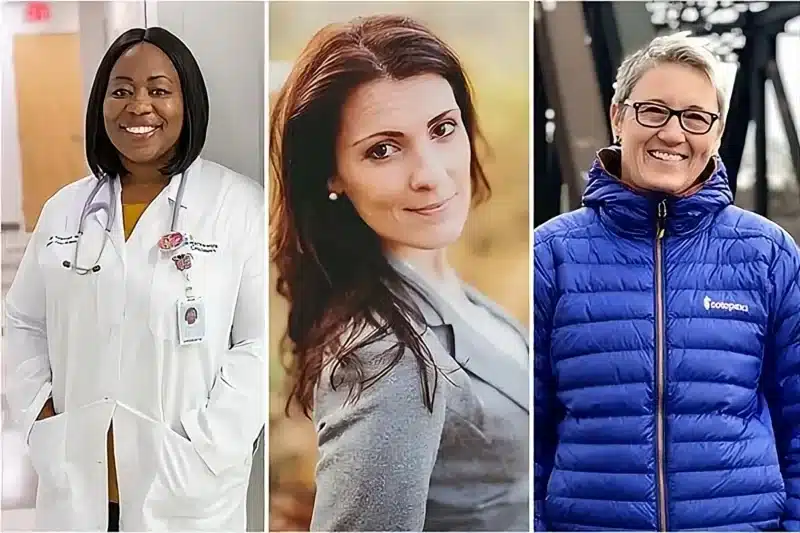
Online Master of Public Health students Akua Amponsah, Heather Thobe and Julia Applegate
Dr. Akua Amponsah, Heather Thobe and Julia Applegate

The fully online Master of Public Health Program for Experienced Professionals (MPH-PEP) was created for individuals in the workforce who are ready to expand their knowledge and grow their promise in public health, community health and health care. With a curriculum focused on population health leadership and management, organizational operations, decision-making and real-world public health practice, MPH-PEP students learn to work across sectors to drive meaningful change in the populations they serve.

But you may be wondering: Who pursues an MPH degree in the MPH-PEP program? Where do MPH-PEP students and graduates work?

Career outcomes for Master of Public Health graduates can vary greatly. We referred to the U.S. Bureau of Labor Statistics (BLS) for more insight into the projected growth of careers in community health, health education and health services management.

According to the BLS, the employment of community health workers and health education specialists is expected to grow 13 percent between 2019 and 2029, due to an increasing desire to improve health outcomes and reduce healthcare costs nationwide. The employment of medical and health services managers is also expected to grow by 32 percent, while demand for occupational health and safety specialists will increase by 4 percent.

Explore the stories below to learn more about student and alumni experiences in the online Master of Public Health Program for Experienced Professionals, and reach out to us directly for more information on what you can do with a Master of Public Health.

Director of a Community Health Institute

Julia Applegate spent her career fighting for reproductive justice and raising awareness about HIV/AIDS. A bachelor’s in political science and a master’s in women’s studies led Applegate to roles in academia and government, and it was while working for a local health department that she realized she would benefit from a degree in public health.

“Being closer to the communities served on the local level helped me see what a big and real impact public health work can have on the lives of individuals and communities, and the social justice aspect of public health combined perfectly with my interests in gender, sexuality and the politics of health,” Applegate said.

Applegate served as the director of a nonprofit health institute focused on LGBTQ+ health education, research and community engagement to improve health and wellness among sexual minority communities in Ohio.

“I really enjoyed that the MPH-PEP classes had practical application to my work, specifically the courses that focused on health care administration and program planning,” Applegate said.

Pediatrician

Dr. Akua Amponsah keeps busy between her roles as a professor of pediatrics and lead pediatrician at the Linden Primary Care Center, where she mostly cares for underserved patients. Amponsah had always considered getting a Master of Public Health to advance her work and interests in health equity but wasn’t sure how she’d fit courses into her jam-packed schedule. Then, she discovered Ohio State’s 100% online MPH-PEP.

“The online format is invaluable, as it gives great flexibility for someone like me,” Amponsah said. “The courses have already helped me look at my professional interactions and work I do through a different lens … This degree will give me more tools to do the work I’m doing with more impact and enable me to better respond to the health needs of the population I serve.”

Behavioral Health Clinical Coordinator

When mental health counselor Heather Thobe began working for a children’s hospital, she noticed an increasing number of transgender and gender-diverse youth seeking therapy. Around the same time, the hospital announced it would be launching a new mental health program surrounding gender development. Thobe applied and secured a job as the program’s behavioral health clinical coordinator, where she focuses on serving this population. For Thobe, deciding to pursue the online MPH-PEP was as much about furthering her education as it was about furthering her ability to help and understand children in need.

“I wanted a degree that complemented what I was doing in my clinic and would help me fine-tune my leadership skills, as well as identify gaps in care,” Thobe said. “I find myself using articles, techniques and strategies I’ve learned in class in my daily work practice. And the best thing is that it happened right away — the first chapter I read, I was taking notes for work, not just for class. It’s practical information that can be added on top of so many different careers.”

Earning your Master of Public Health online through Ohio State’s MPH-PEP is flexible and relevant to a wide range of professions in diverse fields — better positioning you to advance the well-being of your community and your career. 

Ready to give online classes a try? Chat with an enrollment advisor.

What can you do with a bioethics master’s degree?

The Master of Arts in Bioethics at Ohio State is an interdisciplinary and fully online master’s degree designed for healthcare professionals, researchers, legal professionals, social scientists, or anyone with an interest in engaging with questions in bioethics, whether they be biomedical, social, technological, ecological, religious, or philosophical. Students who pursue a bioethics degree will find a wide range of areas of inquiry and applications.

In what fields do graduates of the online bioethics master’s program work? Because bioethics is interdisciplinary and multidisciplinary, our graduates go on to work in a variety of professions and fields, including:

  • Medicine
  • Veterinary medicine
  • Social work
  • Health law
  • Policymaking
  • Public health
  • Biomedical research
  • Chaplaincy
  • Dentistry

What can you do with an online bioethics master’s degree?

Because bioethics is an interdisciplinary and multidisciplinary field, you can use a bioethics degree in many career paths. While some choose to pursue a primary career in ethics most of our students pursue an education in bioethics to enhance another professional field. Individuals who choose bioethics as a primary career often work as clinical ethicists within a healthcare institution or system. Others use their bioethics degree to complement their primary career-for example, in law or health care-by providing specialized expertise and skills. Many of our graduates also use their bioethics degree to gain leadership positions within their organizations, including serving as chairs of ethics committees or directors of mission and ethics. As you can see, the career outcomes for the program are as diverse and varied as the program itself.
Discover a few job titles held by graduates of the online Master of Arts in Bioethics:

  • Neonatologist
  • Clinical Research Ethicist
  • Assistant Professor and Palliative Care Physician

We spoke with a few of our graduates to learn more about their educational journeys and how the online bioethics master’s degree has helped them grow their unique careers. Explore their stories below, or reach out to us directly, to learn what you can do with a bioethics master’s degree from Ohio State.

Neonatologist

A neonatology fellowship at Nationwide Children’s Hospital inspired Dr. Hevil Shah to explore the bioethics master’s program at Ohio State. With improvements in technology pushing the limits of viability for future generations, Dr. Shah started thinking about the ethical implications of such medical decisions and what they would ultimately mean for families.

“When I started wanting that background knowledge, that’s what got me interested in the program – because this is the future,” Dr. Shah said. “Every NICU and neonatal practice is going toward offering the possibility of life and hope to children where even a few years ago that wasn’t possible. And there’s a lot of outcomes where we’re going to have to figure out what this all means from a biomedical ethics standpoint.”

Dr. Shah valued the opportunity his courses provided to have conversations with peers located around the country from a variety of backgrounds and professions and hear their experiences firsthand – while sharing his own.

“In my classes, I might be talking to someone who has never been inside a NICU, who has no idea what it means to have a child with cerebral palsy or developmental difficulties. It can really change your perspective to hear about those things from a person who has seen or experienced them rather than just read about them,” Dr. Shah said.

Now a neonatologist in Fort Worth, Texas, Dr. Shah credits Ohio State’s bioethics master’s program with opening his mind and providing the tools to have difficult conversations.

“The Master of Bioethics program made me a better physician. When you hear about that ’22-week miracle baby,’ you don’t consider what ethical questions were running through the minds of the doctors, the nursing staff or the families. There’s so much we don’t see when we’re hearing that story on social media,” Dr. Shah said. “Now that I have the training, I can have those difficult conversations with my staff and the families when the outcome is different and try to provide closure.”

“The Master of Bioethics program made me a better physician…Now that I have the training, I can have those difficult conversations with my staff and the families and try to provide closure.”
-Dr. Hevil Shah

Clinical Research Ethicist

Alumna Alana Monzon is a clinical research ethicist, specializing in human subject protections for the National Institute of Health’s Division of AIDS research. Each day, she reviews informed consent documents, ensures adherence to federal and international regulations, and translates the ethical basis of those regulations to researchers. Monzon enrolled in the Master of Arts in Bioethics program hoping to advance her career in health research, and along the way, discovered a passion for health research equity.

“The online bioethics master’s program provided knowledge in the background of my profession and an understanding of why my job exists in the first place – as a measure to protect participants in research from harm, coercion, and unethical treatment,” Monzon said. “From climate change to humanitarian crises to social injustice, bioethics serves a vital role as we think about how life can flourish. Studying in this program will give you new ways of thinking about old problems and help you to always approach new challenges with a critical and open mind.”

“From climate change to humanitarian crises to social injustice, bioethics serves a vital role as we think about how life can flourish. Studying in this program will give you new ways of thinking about old problems and help you to always approach new challenges with a critical and open mind.”
-Alana Monzon

Assistant Professor and Palliative Care Physician

Bioethics graduate-turned-professor Dr. Nicole Shirilla first became interested in bioethics through her work as palliative care physician. Caring for extremely ill patients, often toward the end of their lives, brought up many ethical considerations, and she wanted training to ensure she was serving both her patients and her colleagues well. Ohio State’s online bioethics master’s program was the perfect fit. With the help of her advisors, Dr. Shirilla was able to map out a plan of study that allowed her to graduate in two years, while working full time.

A fellowship in clinical ethics helped Dr. Shirilla obtain the hands-on experience she was looking for, but the bioethics master’s program provided the formal education she needed to achieve her goal of becoming an educator.

“As someone who wants to teach and lead others, completing this degree was really important to me,” she said. “Since completing the degree, I have been given more opportunities to teach at the medical school. I am now starting to have a teaching role within the master’s program, as well, co-teaching classes that I took when I was a student: Clinical Ethics and End-of-Life Ethics.”

With the continuation of the COVID-19 pandemic, Dr. Shirilla’s work as a clinical ethicist and medical educator has become even more challenging – and rewarding.

“As graduates of this program, we’ve been trained to engage in biomedical ethics conversations, recognizing that it’s almost certain that people in a diverse, pluralistic society will have differing perspectives,” Dr. Shirilla said.

“Being able to dialogue in a respectful and professional way is incredibly important – all while striving toward the best ethic possible in any given situation. That’s the tension and the excitement and the value of the role of clinical ethics. Undoubtedly, it can be incredibly challenging at times. But if we don’t do it, who would? And what would be the consequence if people weren’t willing to engage on matters that can be challenging?”

“The work can be incredibly challenging at times. But if we don’t do it, who would? And what would be the consequence if people weren’t willing to engage on matters that can be challenging?”
-Dr. Nicole Shirilla

Ohio State’s online Master of Arts in Bioethics is applicable to a wide range of professions, allowing students the opportunity to explore and discover answers to the ethical questions they’re most passionate about.

Want to learn more about this interdisciplinary online master’s degree? Contact us or visit our website for more information, and we can help you on your journey.

Graduate Certificate vs. Master’s Degree

 At some point in your professional career, you’ll undoubtedly explore the possibility of earning credentials beyond a bachelor’s degree. While there are many different types of credentials that indicate achievement in a skill or subject matter, two of the most common are graduate certificates and master’s degrees. By earning a graduate certificate or master’s degree, you’ll learn skills that you can immediately apply to your professional life. Most higher education institutions offer both types of programs, and many offer them online or in person.

When it comes to deciding whether a master’s degree or graduate certificate is right for you, there are many factors to take into account. It’s important to know which option will be most beneficial in the next steps of your career. Ohio State Online’s experts can help guide you through this process, so send us any questions you may have.

No matter what you decide, the most important thing is the ability to apply these credentials and skills to your professional life. Before you decide which type of program you should choose, it is helpful to understand the benefits of each.

What is a graduate certificate? Is a graduate certificate a degree?

A graduate certificate is a credential representing specialized training in a specific topic or skill. Sometimes referred to as a “professional certificate,” graduate certificates offer professional development training ideal for fine-tuning skills or knowledge within a defined framework of study, complementing your experience or growing your expertise in a specific subject. Graduate certificates can also provide opportunities for career advancement in a particular field or industry, or prepare students to sit for certain licensure exams.

These programs typically only take a short period of time, often between 12-15 credit hours (or one to two semesters, if attending full time). Due to their relatively short time to completion, a graduate certificate typically costs less than a master’s degree.

Is a graduate certificate a degree?

A graduate certificate is not considered a graduate degree, like a master’s or doctoral degree. However, it can provide a strong foundation for future study that results in a graduate degree. The credits earned in a graduate certificate program may satisfy requirements for entry into certain graduate programs.

Graduate certificates may also provide the skills necessary to transition to a new field of work.

Why earn a master’s degree?

Compared to graduate certificates, a master’s degree focuses on strategic skill development in a field rather than specialization on a single subject. Within a master’s degree program, there is typically more freedom to customize your experience to your interest and goals. Many advanced positions, especially in public administration or business, require a master’s degree as a prerequisite, and a master’s degree is necessary if you have the desire to eventually earn a doctorate degree.

Like graduate certificates, some master’s degrees allow students the opportunity to earn industry-recognized credentials – which may be required if you’re changing careers. For example, graduating from the online Master of Clinical Research program qualifies students to earn their Clinical Research Coordinator Certification, Clinical Research Professionals Certification or Regulatory Affairs Certification, after a requisite time period working in the field.

Based on data provided by the U.S. Bureau of Labor Statistics, master’s degree holders earn more than 16% higher wages than bachelor’s degree holders. A master’s degree typically takes one to two years to complete if attending full time, and thus typically costs more than a graduate certificate.

How to decide between a graduate certificate and a master’s degree

Your choice of whether to earn a master’s degree or graduate certificate will depend on your personal and professional goals. To decide which type of credential is right for you, consider the following factors:

What are your career goals?

Graduate certificates and master’s degrees can each lead to career advancement, whether you’re looking for a new job or a promotion in your current role. While graduate certificates may be valuable within a particular field, master’s degree credentials are typically more easily transferable between industries.

What new skills do you hope to gain?

Developing new skills or fine-tuning your abilities are vital for professional development. A master’s degree and a graduate certificate will each teach you new skills to apply to your professional life. A master’s degree will not only help you develop skills, but also provide you with the strategic vision to apply those skills in a variety of environments. A graduate certificate will focus specifically on one skill or a limited set of skills.

How much time and money can you invest in a program?

A graduate certificate typically takes less than one year to complete, while a master’s degree will typically take one to two years, perhaps longer if you enroll part-time. To continue working full time as you earn your credential, consider enrolling in an online graduate certificate or online master’s degree program that allows you to complete work on your own schedule.

A graduate certificate can typically be earned for a fraction of the cost of a master’s degree, though each should be seen as an investment in your future.

Earning both a graduate certificate and a master’s degree

In some instances, it may be helpful to earn both a graduate certificate and a master’s degree. Some master’s degree programs, like the online Master of Public Administration and Leadership from the John Glenn College of Public Affairs, allow credits from a graduate certificate to be applied to a master’s degree so that you may continue your education.

Similarly, the online Assistive and Rehabilitative Technology Graduate Certificate can complement advanced study in health and rehabilitation sciences, and selected credits may apply toward the online Master of Science in Health and Rehabilitation Sciences, allowing students to build expertise while progressing toward a graduate degree.

Finding a graduate certificate or master’s degree program

As you evaluate whether you want to earn a graduate certificate or master’s degree, weigh the pros and cons of both options. Each can be a valuable investment, regardless of your level of experience in your field, whether you recently graduated, are looking to change your field, or simply looking for a new challenge.